Medicare GLP-1 Bridge Program Explained
Permalink: medicare-glp1-bridge-program-50-dollar-weight-loss-drugs
SEO Description: CMS will offer eligible Medicare beneficiaries GLP-1 medications for $50 monthly starting July 2026. Learn who may qualify.
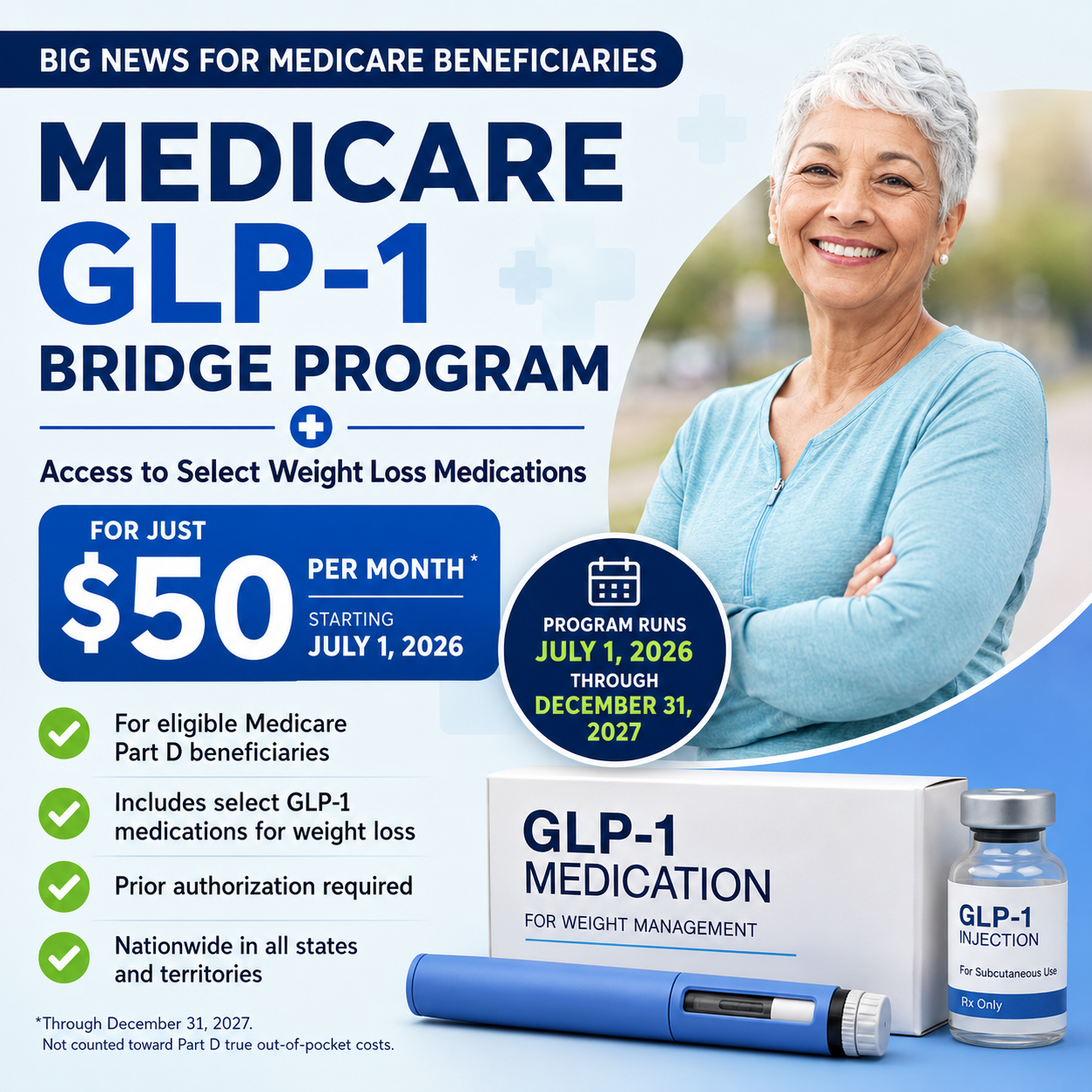
Medicare beneficiaries may soon have a new way to access certain GLP-1 weight loss medications at a dramatically lower monthly cost. CMS has announced the Medicare GLP-1 Bridge, a short-term demonstration program designed to provide eligible Medicare Part D beneficiaries access to select GLP-1 medications for $50 per month beginning July 1, 2026, through December 31, 2027.
What Is the Medicare GLP-1 Bridge Program?
The Medicare GLP-1 Bridge Program is a short-term demonstration from the Centers for Medicare & Medicaid Services, also known as CMS. The program is designed to help eligible Medicare Part D beneficiaries access certain GLP-1 medications used to reduce excess body weight and maintain weight reduction.
According to CMS, the program will begin on July 1, 2026, and continue through December 31, 2027. During this period, eligible beneficiaries may be able to receive certain GLP-1 medications for a $50 monthly copay.
This is a major announcement because Medicare coverage for weight loss medications has historically been very limited. Many patients have been unable to access brand-name GLP-1 medications because of high cash prices, strict insurance rules, or lack of coverage when the medication is prescribed specifically for weight loss.
For patients who have been told that medications like Wegovy or Zepbound are too expensive, not covered, or difficult to obtain, the Medicare GLP-1 Bridge could represent an important shift in access.
You can view the official CMS Medicare GLP-1 Bridge page here: CMS Medicare GLP-1 Bridge Program.
Why the Medicare GLP-1 Bridge Matters
Obesity is a chronic medical condition that can increase the risk of many serious health problems, including type 2 diabetes, high blood pressure, heart disease, sleep apnea, joint pain, fatty liver disease, and certain metabolic complications.
For years, many patients were told to simply eat less and move more. While nutrition, physical activity, and behavior change are extremely important, obesity is more complex than willpower alone. Hormones, appetite signaling, insulin resistance, medication side effects, genetics, sleep, stress, and medical history can all affect weight.
GLP-1 medications have changed the conversation because they target appetite and metabolic pathways in a way that can help many patients achieve meaningful weight loss when used appropriately under medical supervision.
At Life IV Weight Loss, we frequently explain that medical weight loss works best when medication is paired with a realistic plan for nutrition, calorie awareness, protein intake, hydration, physical activity, and ongoing follow-up care.
When Does the Medicare GLP-1 Bridge Start?
The Medicare GLP-1 Bridge is scheduled to begin on July 1, 2026.
CMS has stated that the program will run through December 31, 2027. This makes it a time-limited demonstration, not a permanent Medicare benefit at this time.
That distinction is important. The program gives CMS a way to test access, utilization, payment processes, prior authorization workflows, and overall program impact before any broader long-term policy changes are made.
How Much Will GLP-1 Medications Cost Through the Program?
CMS states that eligible Medicare beneficiaries will pay a $50 copay for a monthly supply of eligible GLP-1 medications through the Medicare GLP-1 Bridge.
This is significantly lower than the typical cash cost of many brand-name GLP-1 medications, which can often cost hundreds or even more than $1,000 per month without coverage.
For seniors on fixed incomes, the $50 monthly access point could make treatment possible when it previously felt out of reach.
You can read the CMS press release here: CMS Press Release on $50 Monthly GLP-1 Access.
Which GLP-1 Medications Are Included?
CMS states that eligible GLP-1 drugs under the Medicare GLP-1 Bridge currently include certain products when used to reduce excess body weight and maintain weight reduction.
According to the CMS Medicare GLP-1 Bridge page, the listed products include:
- Foundayo
- Wegovy injection and tablets
- Zepbound KwikPen
CMS also notes that the list of products and National Drug Codes may be updated over the course of the Medicare GLP-1 Bridge.
This matters because not every GLP-1 medication is automatically included. Patients should not assume that every medication in the GLP-1 family will qualify under this specific program.
Is Ozempic Included in the Medicare GLP-1 Bridge?
Based on the current CMS Medicare GLP-1 Bridge page, Ozempic is not listed as one of the eligible medications for this specific Bridge program when used for weight management.
This can be confusing because Ozempic, Wegovy, Rybelsus, Mounjaro, and Zepbound are often discussed together. However, these medications have different FDA-approved indications, brand names, formulations, and insurance coverage rules.
Ozempic is commonly associated with type 2 diabetes treatment. Wegovy is associated with chronic weight management. Zepbound is associated with chronic weight management and also has other indications. Coverage can vary based on the diagnosis, the medication, the plan, and the reason it is prescribed.
If you are unsure which medication you are taking or why your insurance covers one product but not another, a medical weight loss provider can help you understand the difference.
Who May Qualify for the Medicare GLP-1 Bridge?
CMS states that the Medicare GLP-1 Bridge will be available nationwide in all states and territories, but beneficiaries must meet certain requirements.
To qualify, beneficiaries must generally be enrolled in an eligible Medicare Part D prescription drug plan or a Medicare Advantage plan with prescription drug coverage. CMS also states that beneficiaries must meet prior authorization criteria.
The eligibility criteria include clinical requirements related to BMI and certain obesity-related or cardiometabolic health conditions.
Potential BMI-Based Eligibility
CMS describes clinical criteria that may include beneficiaries who had a BMI of 35 or greater at the time they initiated GLP-1 therapy.
CMS also describes eligibility pathways for beneficiaries with a BMI of 30 or greater with certain qualifying conditions, and beneficiaries with a BMI of 27 or greater with certain cardiometabolic risk factors.
Because prior authorization will be required, documentation will matter. Providers may need to verify the beneficiary’s BMI at the time GLP-1 therapy was initiated, even if the patient’s BMI is lower by the time the prior authorization request is submitted.
Why BMI Documentation Matters
BMI, or body mass index, is a screening tool that compares weight to height. It does not tell the whole story of a person’s health, but it is commonly used by insurance companies, Medicare programs, and clinical guidelines to determine eligibility for weight-related treatments.
For example, a patient who started GLP-1 therapy with a BMI of 37 may lose weight and later have a BMI of 34. CMS indicates that eligibility may be based on whether the beneficiary met the criteria at the time GLP-1 therapy was initiated.
This is one reason it is important to work with a medical office that documents weight, BMI, diagnoses, medication start dates, and related health conditions carefully.
Will Prior Authorization Be Required?
Yes. CMS states that beneficiaries must meet prior authorization criteria to access eligible GLP-1 drugs through the Medicare GLP-1 Bridge.
Prior authorization is the process where a healthcare provider submits documentation showing that a patient meets the coverage criteria for a medication. This may include diagnosis codes, BMI history, comorbid conditions, previous treatment history, and medication indication.
For many patients, prior authorization can be frustrating. It may involve delays, requests for more information, or denials if the documentation is incomplete.
This is why working with a weight loss clinic that understands medication access, documentation, and insurance workflows can be helpful.
Life IV Weight Loss helps patients navigate medically supervised weight management and can provide education about available options. You can learn more by visiting Life IV Weight Loss.
How Will the Medicare GLP-1 Bridge Work?
CMS says the Medicare GLP-1 Bridge will operate outside of the normal Medicare Part D benefit payment flow.
That means this program is not simply the same as a medication being added to every Part D formulary. Instead, CMS will use a central processor to manage prior authorization, claims adjudication, and pharmacy payment.
CMS has stated that Humana, the current administrator of the Limited Income Newly Eligible Transition program, will serve as the central processor for the Medicare GLP-1 Bridge.
This centralized approach is intended to create a more consistent process across the Medicare program.
Will the $50 Copay Count Toward Part D Out-of-Pocket Costs?
CMS states that the Medicare GLP-1 Bridge operates outside of the Medicare Part D benefit payment flow.
According to CMS, the $50 copay for eligible beneficiaries will not count toward the beneficiary’s true out-of-pocket costs under their Part D plan.
This is an important detail for Medicare beneficiaries who closely track their Part D expenses. The Bridge program may lower the cost of the GLP-1 medication itself, but it does not function the same way as a regular Part D covered drug claim.
Can Coupons or Discount Cards Be Used?
CMS states that coupons and discount programs may not be applied to Medicare GLP-1 Bridge claims.
This is not unusual for Medicare-related medication programs. Manufacturer savings cards and commercial coupons often cannot be used with Medicare, Medicaid, or other government-funded programs.
The key benefit of the Bridge program is that eligible beneficiaries may already have access to the medication at the $50 monthly copay amount if they meet the program requirements.
Why This Program Could Be a Turning Point for Medicare Weight Loss Coverage
For years, Medicare has generally excluded medications used for weight loss alone. This has created a major gap for older adults who need treatment for obesity but cannot afford brand-name medications out of pocket.
The Medicare GLP-1 Bridge does not permanently erase that legal and policy history, but it does represent a meaningful change in direction.
CMS is acknowledging that GLP-1 medications can be evidence-based treatments for obesity and related conditions. By creating a demonstration program, CMS can evaluate whether broader access improves outcomes and whether the program can be delivered in a sustainable way.
If the program performs well, it could influence future Medicare policy, commercial insurance coverage, employer health plans, and the way obesity treatment is viewed across the healthcare system.
What Seniors Should Do Before July 2026
If you are a Medicare beneficiary interested in GLP-1 medications for weight loss, there are several steps you can take before the program begins.
1. Review Your Current Medicare Coverage
Check whether you are enrolled in a standalone Medicare Part D prescription drug plan or a Medicare Advantage plan that includes prescription drug coverage.
Because the Bridge program is connected to Medicare Part D eligibility, your prescription drug coverage status matters.
2. Talk With Your Healthcare Provider
Ask your provider whether a GLP-1 medication is medically appropriate for you. These medications are not right for everyone.
Your provider should review your medical history, current medications, weight history, BMI, blood sugar status, kidney function, gastrointestinal history, and risk factors before recommending treatment.
3. Gather Weight and BMI History
Since eligibility may depend on BMI at the time GLP-1 therapy was initiated, it may be helpful to have accurate historical weight and BMI documentation.
This is especially important for patients who have already started a GLP-1 medication and lost weight before the Medicare GLP-1 Bridge begins.
4. Understand That Prior Authorization May Take Time
Even with the Bridge program, patients should expect some administrative steps. Prior authorization is likely to require accurate documentation and provider involvement.
Do not wait until you are completely out of medication to ask questions about eligibility, refills, or authorization requirements.
5. Build Healthy Habits Now
GLP-1 medications can help reduce appetite and improve weight loss outcomes, but long-term success still depends on daily habits.
Patients should focus on protein intake, hydration, strength training when appropriate, calorie awareness, constipation prevention, sleep, and sustainable nutrition strategies.
If you need help building a realistic plan, visit Life IV Weight Loss to learn more about medically supervised weight management.
GLP-1 Medications Are Not Magic Shots
One of the biggest misconceptions about GLP-1 medications is that they do all the work by themselves.
GLP-1 medications can be very helpful for appetite regulation, cravings, portion control, and metabolic improvement, but they are not a replacement for a complete medical weight loss plan.
At Life IV Weight Loss, we focus on the four pillars of weight loss:
- Motivation
- Calorie restriction
- Calorie tracking
- Medications
Medication can make the process easier, but patients still need the right structure, accountability, and follow-up to protect muscle mass, minimize side effects, and maintain results.
Common Side Effects of GLP-1 Medications
GLP-1 medications may cause side effects, especially during dose increases.
Common side effects may include:
- Nausea
- Vomiting
- Constipation
- Diarrhea
- Abdominal discomfort
- Decreased appetite
- Heartburn
- Fatigue
Older adults may need especially careful monitoring because they may be more likely to have multiple medications, chronic health conditions, reduced fluid intake, or higher risk of dehydration.
This is another reason medical supervision matters. A good weight loss plan should include education on hydration, protein intake, constipation prevention, and when to contact a healthcare provider.
Questions to Ask Your Provider
If you are interested in the Medicare GLP-1 Bridge, consider asking your provider the following questions:
- Do I meet the BMI or medical criteria for GLP-1 treatment?
- Would Wegovy, Zepbound, or another eligible medication be appropriate for me?
- Do I have any contraindications or higher-risk medical history?
- How will we document my BMI and qualifying conditions?
- Will prior authorization be required?
- How often will I need follow-up visits?
- What should I eat while taking a GLP-1 medication?
- How can I prevent constipation, dehydration, or muscle loss?
- What happens if I stop the medication?
What This Means for Patients Already Taking GLP-1 Medications
If you are already taking a GLP-1 medication before July 1, 2026, the Medicare GLP-1 Bridge may still be relevant.
CMS indicates that eligibility may be based on whether the beneficiary met clinical criteria at the time GLP-1 therapy was initiated. That means historical documentation may matter.
For example, if a patient started therapy with a BMI of 37 and later lost weight, the provider may need to attest that the patient met the BMI criteria when treatment began.
This could be very important for patients who have successfully lost weight on therapy and are worried they may no longer meet the BMI threshold by the time the Bridge program launches.
What This Means for Patients Who Have Never Taken a GLP-1
If you have never taken a GLP-1 medication, the Bridge program may create a new pathway to access treatment if you qualify.
However, patients should not start a medication solely because the cost is lower. The decision should be based on medical appropriateness, health goals, risk factors, and a long-term plan.
Before starting a GLP-1, your provider should discuss how the medication works, expected weight loss, side effects, dose escalation, follow-up schedule, nutrition goals, and what happens if the medication is discontinued.
Will This Replace Medical Weight Loss Clinics?
No. In fact, this program may make medical weight loss clinics even more important.
Medication access is only one part of treatment. Patients still need evaluation, education, monitoring, documentation, nutrition support, side effect management, and long-term planning.
A medically supervised weight loss clinic can help patients understand whether they are a candidate for treatment, how to use medication safely, and how to build habits that support long-term success.
Life IV Weight Loss offers medical weight management services for patients who want a structured approach to weight loss. Learn more at https://lifeivweightloss.com/.
Important Limitations of the Medicare GLP-1 Bridge
While this announcement is exciting, patients should understand the limitations.
- The program does not begin until July 1, 2026.
- It is currently scheduled to end December 31, 2027.
- It is a demonstration program, not permanent Medicare coverage.
- Only certain medications and formulations are included.
- Prior authorization criteria will apply.
- The $50 copay does not count toward Part D true out-of-pocket costs.
- Coupons and discount programs cannot be used for Bridge claims.
Patients should stay updated as CMS releases more information and as pharmacies, providers, and plans prepare for implementation.
Final Thoughts
The Medicare GLP-1 Bridge Program could be one of the most important changes in obesity medication access for Medicare beneficiaries in years.
Beginning July 1, 2026, eligible Medicare Part D beneficiaries may be able to access select GLP-1 medications for $50 per month through a CMS demonstration program that runs through December 31, 2027.
For seniors who have struggled with the high cost of weight loss medications, this could open the door to treatment that was previously unaffordable.
Still, medication is only one part of the journey. Long-term success requires education, medical supervision, lifestyle support, nutrition planning, and regular follow-up.
If you are interested in learning more about medical weight loss, GLP-1 medications, or supervised weight management options, visit Life IV Weight Loss.
References