Why Small Amounts of Weight Loss Matter More Than You Think
Weight loss is not an all-or-nothing process. From a medical standpoint, even modest reductions in body weight lead to improvements in cardiovascular, metabolic, and endocrine function. Research consistently shows that losing as little as 5% of body weight can significantly reduce health risks.
At Life IV Weight Loss, we emphasize sustainable, medically supervised progress—not crash dieting or unrealistic expectations. Let’s explore what really happens when you lose 5, 10, and 20 pounds.
What Happens When You Lose 5 Pounds
Blood Pressure Improvements
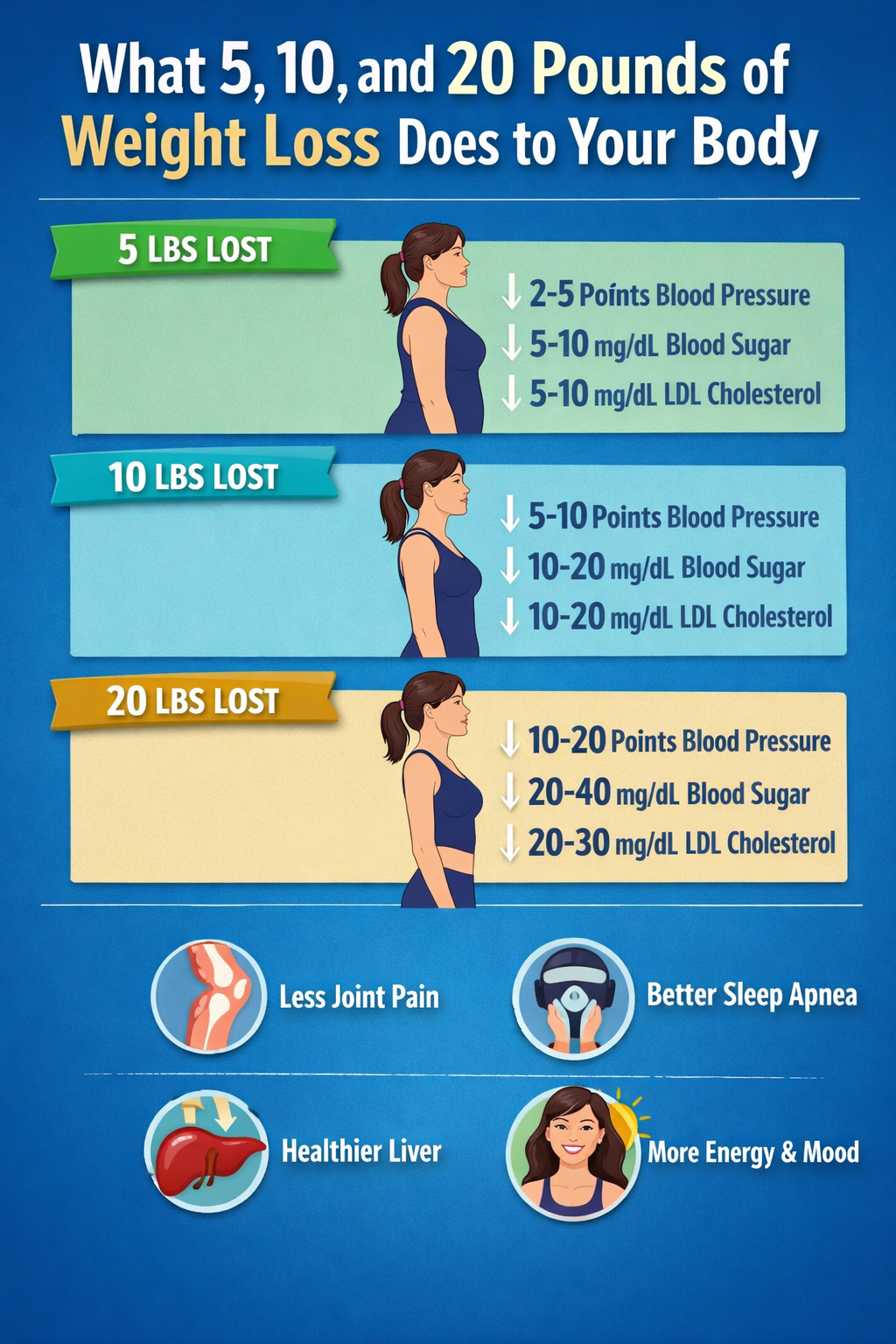
Losing just 5 pounds can reduce systolic blood pressure by approximately 2–5 mmHg. That may sound small, but it meaningfully lowers your risk of heart attack and stroke—especially if you already have hypertension.
Excess fat tissue increases vascular resistance and forces your heart to work harder. As weight decreases, blood vessels relax, circulation improves, and blood pressure begins to normalize.
Cholesterol Changes
With a 5-pound weight loss, many people experience:
- LDL (“bad”) cholesterol reduction of 5–10 mg/dL
- Triglyceride reductions of 10–20%
- Early improvement in HDL (“good”) cholesterol
This happens because fat cells release fewer inflammatory markers, allowing your liver to regulate cholesterol more effectively.
Blood Sugar & Diabetes Impact
For people with insulin resistance or type 2 diabetes, losing 5 pounds can lower fasting blood glucose by 5–10 mg/dL. More importantly, insulin sensitivity begins to improve.
This means your body requires less insulin to move glucose into your cells—reducing strain on the pancreas and lowering A1C over time.
Learn more about medically supported weight loss at Life IV Weight Loss.
What Happens When You Lose 10 Pounds
Blood Pressure Drops Become Clinically Significant
At 10 pounds lost, systolic blood pressure often drops by 5–10 mmHg, with diastolic pressure decreasing by 3–6 mmHg.
This level of improvement can:
- Reduce the need for blood pressure medication
- Lower stroke risk by up to 30%
- Decrease heart failure risk
Cholesterol Profile Shifts
With a 10-pound weight loss, patients often see:
- LDL cholesterol reduction of 10–20 mg/dL
- Triglycerides decrease by 20–30%
- HDL cholesterol increase by 3–5 mg/dL
This combination dramatically lowers cardiovascular risk.
Blood Sugar Control Improves Noticeably
For patients with diabetes, a 10-pound weight loss can reduce:
- Fasting glucose by 10–20 mg/dL
- A1C by approximately 0.5–1%
Some patients at Life IV Weight Loss are able to reduce or discontinue diabetes medications under provider supervision.
Inflammation & Hormones
Losing 10 pounds reduces inflammatory markers like CRP and improves leptin sensitivity, helping regulate hunger and fullness signals more effectively.
What Happens When You Lose 20 Pounds
Blood Pressure May Normalize
With a 20-pound weight loss, systolic blood pressure may drop by 10–20 mmHg. Many patients move from hypertensive to pre-hypertensive—or even normal—ranges.
This significantly lowers long-term cardiovascular risk.
Major Cholesterol Improvements
At this stage, cholesterol changes are dramatic:
- LDL cholesterol reduction of 20–30+ mg/dL
- Triglycerides reduced by up to 40%
- HDL cholesterol increases of 5–10 mg/dL
These changes rival those achieved with medication alone.
Blood Sugar & Diabetes Remission Potential
For people with type 2 diabetes, losing 20 pounds can:
- Lower fasting glucose by 20–40 mg/dL
- Reduce A1C by 1–2%
- Significantly decrease insulin resistance
In some cases, patients achieve partial or full diabetes remission—especially when weight loss is achieved early in the disease process.
This is why Life IV Weight Loss focuses on early intervention and medically guided care.
Other Powerful Benefits of Losing 5–20 Pounds
Joint & Back Pain Relief
Every pound of weight lost removes approximately 4 pounds of pressure from your knees. Losing 20 pounds removes nearly 80 pounds of force with each step.
Sleep Apnea Improvement
Weight loss reduces airway obstruction, improving sleep apnea severity and reducing daytime fatigue.
Fatty Liver Disease Reversal
Even a 5–10% reduction in body weight can significantly reduce liver fat and improve liver enzyme levels.
Improved Energy & Mental Health
Weight loss improves mitochondrial efficiency, hormone regulation, and neurotransmitter balance—often leading to better mood, focus, and energy.
Why Medical Weight Loss Makes the Difference
Not all weight loss is equal. Crash dieting can lead to muscle loss, metabolic slowdown, and rebound weight gain.
At Life IV Weight Loss, our medically supervised programs focus on:
- Preserving lean muscle mass
- Improving metabolic health
- Using evidence-based medications when appropriate
- Long-term sustainability
Our clients don’t just lose weight—they improve their labs, reduce medications, and reclaim their health.
Final Thoughts: Every Pound Counts
You don’t need to lose 50 pounds to change your health trajectory. Losing 5, 10, or 20 pounds can:
- Lower blood pressure
- Improve cholesterol
- Stabilize blood sugar
- Reduce inflammation
- Decrease long-term disease risk
If you’re ready to experience these changes with expert guidance, visit Life IV Weight Loss and schedule your consultation today.