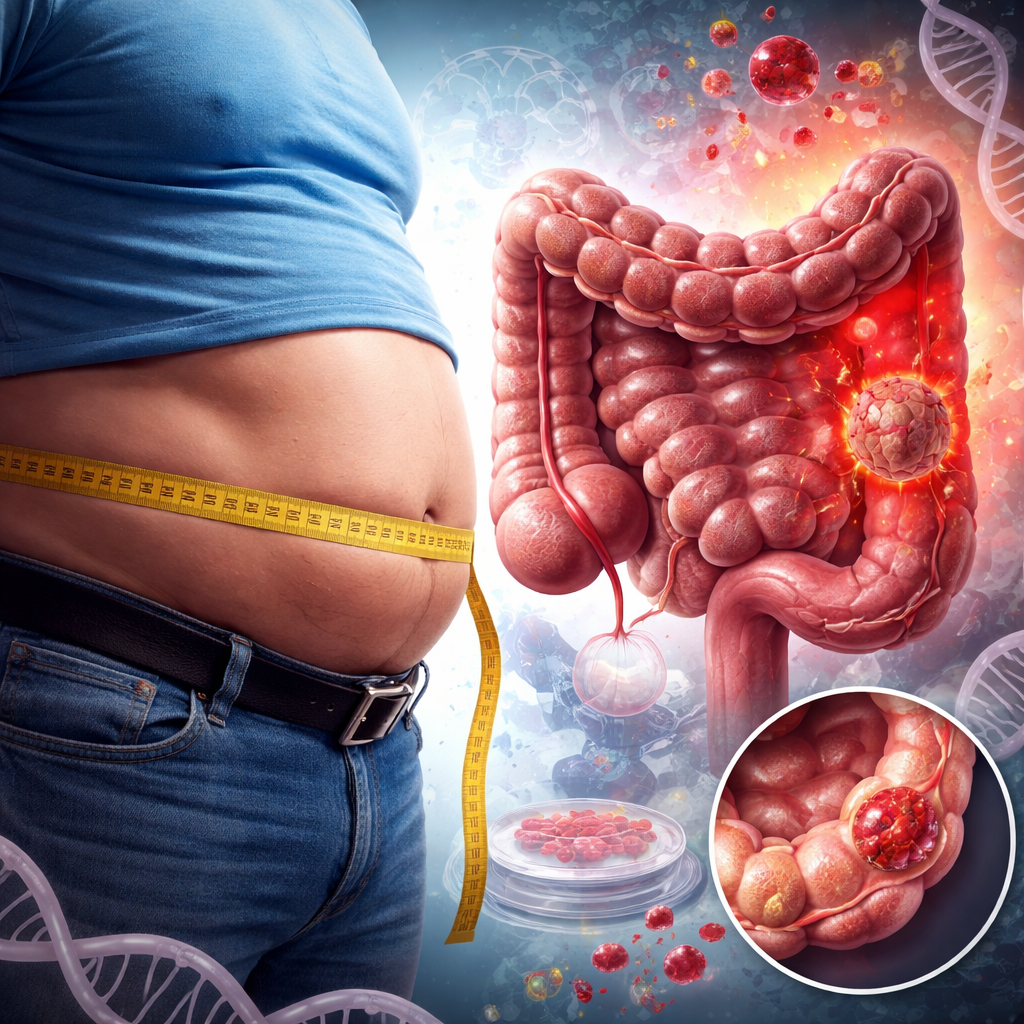
Colorectal cancer is not caused by one single thing, but the evidence is strong that obesity is one of the most important modifiable risk factors in the picture. Researchers have linked excess body fat, especially abdominal fat, to higher colorectal cancer risk through a mix of chronic inflammation, insulin resistance, altered hormones, and changes in the gut environment. That does not mean every person with obesity will develop colorectal cancer, and it does not mean thin people are protected. It does mean body weight, waist size, lifestyle, and screening all deserve serious attention. Below is a deep dive into what the science shows, why this link matters, and what practical steps may help reduce risk.
Last Updated on March 15, 2026 by justin@lifeivtherapy.com
Why this topic matters
When people hear the phrase “obesity and cancer,” they often think of a vague future risk rather than something concrete. But colorectal cancer is one of the strongest examples of how excess body fat can influence cancer development over time. Major organizations, including the National Cancer Institute, the Centers for Disease Control and Prevention, the American Cancer Society, and the World Cancer Research Fund, all recognize obesity as an important risk factor for colorectal cancer.
This matters because colorectal cancer remains one of the most common cancers in the United States. It also matters because body weight, waist size, physical activity, diet quality, and screening habits are all areas where prevention efforts can make a difference. Obesity does not act alone, but it often exists alongside insulin resistance, chronic inflammation, low physical activity, and poor diet quality, all of which can contribute to increased colorectal cancer risk.
At Life IV Weight Loss, long-term health matters more than quick fixes. Sustainable weight management is not just about appearance. It can be part of a broader plan to support metabolic health and potentially reduce the risk of obesity-related conditions, including colorectal cancer.
What is colorectal cancer?
Colorectal cancer is cancer that starts in the colon or rectum. These cancers are grouped together because they share similar biology, screening methods, and risk factors. In many cases, colorectal cancer begins as a polyp, which is a growth in the lining of the colon or rectum. Some polyps remain benign, but others can slowly become cancerous over time.
This is one reason screening matters so much. Colonoscopy can identify and remove certain precancerous polyps before they develop into cancer. That makes colorectal cancer different from many other cancers, because screening can sometimes prevent the disease instead of only detecting it early.
Risk factors for colorectal cancer include age, family history, inherited syndromes, inflammatory bowel disease, smoking, alcohol use, diet, low physical activity, and obesity. Obesity is especially important because it often overlaps with other harmful metabolic changes that can affect the colon and rectum over many years.
Is obesity really linked to colorectal cancer?
Yes. The link between obesity and colorectal cancer is well established. Large observational studies, pooled analyses, and expert reviews have repeatedly found that overweight and obesity are associated with a higher risk of colorectal cancer. The National Cancer Institute specifically lists colorectal cancer among the cancers associated with overweight and obesity. The CDC also identifies colorectal cancer as an obesity-associated cancer.
The American Cancer Society also states that excess body weight increases the risk of several cancers, including colorectal cancer. The World Cancer Research Fund has similarly concluded that maintaining a healthy body weight is an important part of colorectal cancer prevention.
This does not mean obesity guarantees someone will develop colorectal cancer. Cancer risk is never that simple. But it does mean obesity is one of the most important modifiable contributors to colorectal cancer risk, and that makes it a major public health concern.
How strong is the connection?
The connection is strong enough that major cancer organizations consistently include obesity in their prevention guidance. The exact amount of increased risk varies by study and by the way body fat is measured. Some studies use body mass index, or BMI, while others look at waist circumference or waist-to-hip ratio.
That distinction matters because BMI does not show where fat is stored. A person can have a BMI in the overweight or obesity range and still have different levels of metabolic risk depending on how much fat is stored around the abdomen. Research increasingly suggests that central obesity, meaning excess fat around the midsection, may be even more relevant to colorectal cancer risk than BMI alone.
In practical terms, this means that belly fat may tell us more about colorectal cancer risk than total body weight by itself. Visceral fat, which surrounds the organs inside the abdomen, is more metabolically active than fat stored elsewhere. That extra activity can create changes in the body that promote cancer development.
Why abdominal fat matters so much
Not all body fat behaves the same way. Subcutaneous fat sits just under the skin, while visceral fat is stored deeper in the abdomen around internal organs. Visceral fat is considered more dangerous because it functions like an active endocrine and inflammatory tissue.
It releases hormones, inflammatory molecules, fatty acids, and signaling compounds that affect metabolism throughout the body. These changes can contribute to insulin resistance, higher circulating insulin levels, altered hormone signaling, and chronic low-grade inflammation. Those are all factors believed to promote colorectal cancer development.
This is why waist circumference can be such a useful marker. A person may not appear extremely overweight based on the scale alone, but if they carry excess fat around the abdomen, their colorectal cancer risk may still be elevated. That makes body composition and fat distribution more important than many people realize.
How obesity may contribute to colorectal cancer
Researchers do not believe there is just one pathway connecting obesity to colorectal cancer. Instead, several overlapping mechanisms appear to work together over time.
Chronic inflammation
Obesity is associated with chronic low-grade inflammation. Fat tissue, especially visceral fat, produces inflammatory compounds such as interleukin-6 and tumor necrosis factor-alpha. These substances may create a biological environment that encourages abnormal cell growth and makes it easier for damaged cells to survive.
In the colon, this matters because the intestinal lining is constantly renewing itself. Chronic inflammation can increase cell turnover, raise the chance of DNA mistakes during replication, and make the local environment more favorable for tumor growth.
Insulin resistance and hyperinsulinemia
Obesity often leads to insulin resistance, meaning the body becomes less responsive to insulin. To compensate, the pancreas produces more insulin. High insulin levels and related growth signaling pathways may encourage cell proliferation and reduce apoptosis, which is the programmed death of damaged or abnormal cells.
When abnormal cells survive longer than they should, the chance of tumor development rises. This is one reason obesity, prediabetes, type 2 diabetes, and colorectal cancer risk often appear together.
Changes in adipokines
Fat tissue produces signaling molecules called adipokines. Two of the best known are leptin and adiponectin. In obesity, leptin levels often rise and adiponectin levels often fall. Higher leptin may promote inflammation and cell growth, while lower adiponectin may reduce protective anti-inflammatory and insulin-sensitizing effects.
This shift creates another pathway through which obesity may encourage colorectal carcinogenesis.
Gut microbiome disruption
The gut microbiome is increasingly recognized as part of the obesity-cancer connection. Obesity can alter the balance of gut bacteria, the production of microbial metabolites, and the health of the intestinal barrier. These changes may promote inflammation and create a local environment that supports tumor formation.
Because colorectal cancer develops directly within the intestinal tract, changes in the gut environment may be especially important. Diet, body fat, and metabolic health all shape the microbiome, which may partly explain why obesity and colorectal cancer are so closely linked.
Oxidative stress and DNA damage
Obesity is associated with oxidative stress, which refers to an imbalance between harmful reactive oxygen species and the body’s defenses against them. Oxidative stress can damage DNA and other important cellular structures. If this damage affects genes involved in growth regulation, DNA repair, or tumor suppression, it can contribute to cancer formation.
Immune dysfunction
Obesity can also affect the immune system in ways that reduce the body’s ability to detect and destroy abnormal cells. While obesity is associated with more inflammation, it may also weaken certain protective immune responses. That imbalance can make it easier for early cancer cells to persist and grow.
Colon cancer versus rectal cancer
Some research suggests the association between obesity and cancer may be stronger for colon cancer than for rectal cancer, although both are commonly grouped under colorectal cancer. There may also be sex-based differences, with some studies suggesting a stronger association in men. However, the overall evidence still supports obesity as an important risk factor across colorectal cancer more broadly.
The reason these differences may exist is not fully understood. Hormones, fat distribution, body composition, and different measurement methods may all play a role. Even so, the main message remains the same: excess body fat, particularly central fat, is associated with a higher colorectal cancer risk.
Obesity and early-onset colorectal cancer
One of the most concerning trends in recent years has been the rise of early-onset colorectal cancer, which refers to colorectal cancer diagnosed before age 50. Researchers are still investigating why this is happening, but obesity is considered one of the likely contributors.
It is probably not the only reason. Scientists are also studying dietary patterns, ultra-processed foods, sedentary behavior, antibiotic exposure, microbiome changes, and other environmental influences. Still, obesity stands out as one of the most biologically plausible and consistently discussed factors.
This matters because many younger adults do not think they are at risk for colorectal cancer. Symptoms such as rectal bleeding, unexplained abdominal pain, change in bowel habits, iron deficiency anemia, or unexplained weight loss should not be dismissed just because someone is under 50.
Can weight loss lower the risk?
This is one of the most important questions, and the answer is encouraging even though the exact degree of risk reduction can be difficult to measure. The evidence strongly supports that excess body weight increases colorectal cancer risk. It is biologically reasonable to believe that reducing excess body fat, especially visceral fat, would help lower that risk.
Weight loss is also associated with improved insulin sensitivity, reduced inflammatory burden, better blood sugar control, and improved overall metabolic health. Even when a person does not reach their “ideal” weight, moving in a healthier direction may still reduce the biological conditions that support cancer development.
That is one reason medical weight management matters. A structured program can help people improve more than just the number on the scale. It can support healthier metabolism, better daily habits, and more sustainable long-term change. At Life IV Weight Loss, the focus is on evidence-based support rather than crash dieting or unsustainable extremes.
Why physical activity matters too
Physical activity matters independently of weight. Exercise helps improve insulin sensitivity, reduce inflammation, support healthy bowel function, and improve overall metabolic health. These benefits may help lower colorectal cancer risk even when weight loss is modest.
This is important because many people feel stuck if they are not losing weight quickly. But improving physical activity still has value. Walking more, sitting less, adding resistance training, and improving cardiovascular fitness can all support health before dramatic changes appear on the scale.
That means prevention is not all or nothing. A person does not need perfection to start moving in a healthier direction.
Diet and the obesity-colorectal cancer connection
Diet affects colorectal cancer risk both directly and indirectly. Directly, certain eating patterns may influence colon health through fiber intake, processed meat intake, red meat intake, alcohol use, and the gut microbiome. Indirectly, diet strongly affects body weight, abdominal fat, insulin resistance, and inflammation.
Prevention-focused dietary patterns usually emphasize fiber-rich foods, adequate protein, hydration, less reliance on highly processed foods, and better calorie balance over time. This is not about blaming one food or pretending a single ingredient causes cancer. It is about understanding that long-term patterns matter.
Most people do better with a realistic approach than with extreme rules. Sustainable eating habits are far more helpful than short bursts of aggressive dieting followed by rebound weight gain.
That is one reason patients who want real support often turn to Life IV Weight Loss for a structured, medically guided approach.
Does obesity affect outcomes after diagnosis?
Obesity may influence more than just the risk of developing colorectal cancer. It can also affect what happens after diagnosis. Researchers have studied how obesity influences surgery, treatment tolerance, wound healing, metabolic complications, and long-term outcomes.
The results are sometimes mixed, partly because body composition, cancer stage, physical fitness, and muscle mass all complicate the picture. Still, obesity can make treatment more challenging by increasing the burden of related conditions such as diabetes, cardiovascular disease, and poor mobility.
This is another reason obesity should be treated as a serious medical issue rather than a cosmetic one. It affects prevention, diagnosis, treatment, and recovery.
Common myths about obesity and colorectal cancer
Myth: Only severe obesity matters
False. Risk appears to rise along a spectrum, and abdominal obesity may carry risk even when BMI does not seem extremely high. Waist circumference matters.
Myth: Thin people do not get colorectal cancer
False. People at any weight can develop colorectal cancer. Family history, genetics, smoking, alcohol, inflammatory bowel disease, age, and other factors also matter.
Myth: Weight is the only issue
False. Body weight is important, but so are screening habits, exercise, diet quality, metabolic health, inflammation, and fat distribution. Risk is influenced by the whole picture.
Myth: If someone loses weight before diagnosis, obesity could not have played a role
False. Some people with colorectal cancer lose weight before diagnosis, which can make their weight at diagnosis look lower than it was during the years when cancer was developing.
What people can do right now
Fear is not the goal. Action is. The most useful response to this evidence is a practical one.
Know your screening recommendations
Many average-risk adults are now advised to begin colorectal cancer screening at age 45. Some people need earlier screening because of family history, inflammatory bowel disease, hereditary cancer syndromes, or symptoms. Screening recommendations should always be individualized with a healthcare professional.
Pay attention to waist size
Do not focus only on the number on the scale. Central obesity may be especially relevant to colorectal cancer risk, which makes waist circumference an important marker.
Improve metabolic health
Work on insulin resistance, blood sugar control, triglycerides, blood pressure, sleep quality, and physical activity. Improving these areas can support health even before major weight loss occurs.
Move more
Regular movement supports colon health and metabolism. Even modest increases in walking and daily activity can help.
Build sustainable eating habits
Consistency matters more than perfection. Focus on repeatable habits rather than temporary extremes.
Take symptoms seriously
Do not ignore rectal bleeding, unexplained anemia, persistent abdominal pain, change in bowel habits, or unexplained weight loss. Younger age does not rule out colorectal cancer.
Why this matters for weight management
Medical weight management is often discussed in terms of appearance or pounds lost, but that misses the bigger picture. Evidence-based weight care can support blood sugar control, reduce visceral fat, improve energy, lower the burden of obesity-related disease, and potentially reduce the risk of cancers associated with obesity.
For many patients, the hardest part is not knowing what to do. It is building a plan that is realistic enough to maintain. That is why personalized, medically guided care matters. At Life IV Weight Loss, the goal is to help patients create sustainable progress that supports both short-term and long-term health.
The bottom line
Obesity and colorectal cancer are linked by more than simple correlation. Excess body fat, especially around the abdomen, can change the body’s inflammatory, hormonal, metabolic, and microbial environment in ways that may make colorectal cancer more likely. Obesity is not the only risk factor, and it does not mean cancer is inevitable. But it is one of the clearest modifiable risks we know about.
That makes this issue worth taking seriously. Screening matters. Symptom awareness matters. Waist size matters. Physical activity matters. Nutrition matters. And sustainable weight management matters.
If you are looking for a medically guided way to improve your metabolic health and work toward sustainable weight loss, visit Life IV Weight Loss to learn more.